

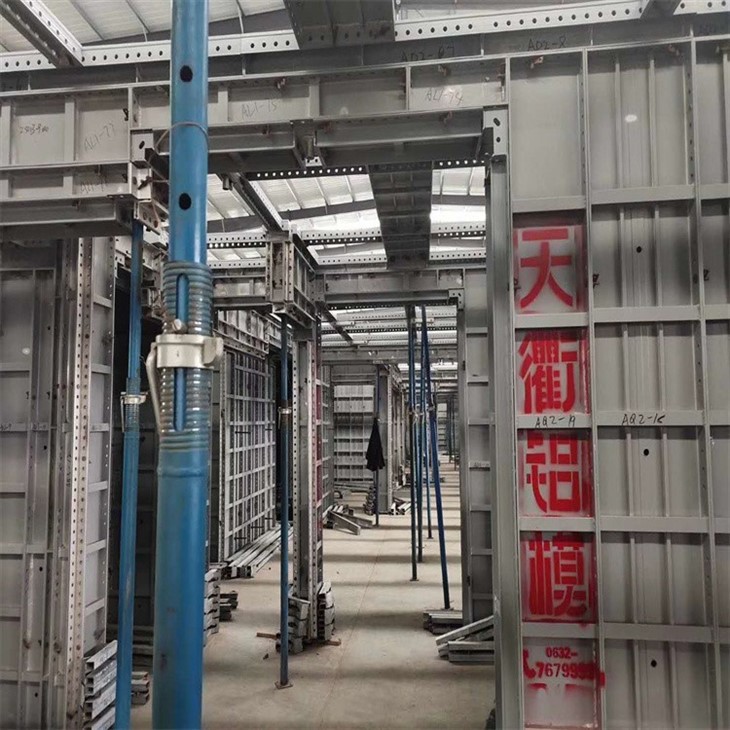
After nearly 20 years of operation and development, China tianqu group has become a large group enterprise integrating real estate, aluminum profiles, aluminum templates, doors and Windows, curtain walls, new energy, trade city, five-star hotels, etc., with more than 10 subsidiaries under its jurisdictionTianqu aluminum mold business covers aluminum mold research and development, design, production, sales, leasing, installation guidance and old plate renovation. At present, zaozhuang city in shandong province has a factory (covers an area of 150 mu, with an annual capacity of 300,000 square meters), zaozhuang city two factory (covers an area of 200 mu, with an annual capacity of 400,000 square meters), Qingdao factory (covers an area of 150 mu, with an annual capacity of 300,000 square meters, mainly radiation around Qingdao and overseas projects) three production bases.
Why Choose Us
High Quality Products
More than 90% of the global aluminum template enterprises are using 6061-t6 aluminum profiles, Tianqu aluminum mold is using self-developed high-strength aluminum alloy profiles.
Our Certificate
The enterprise has passed ISO9001 quality management system certification, the enterprise has been awarded AAA level credit certification, and has more than 40 patents, general manager Ni zuliang was awarded the "good faith entrepreneur" honorary title.
Our Service
Design technical support,Template pre-assembly support,TTechnical guidance and support,TMaterial supply support.
One-stop Solution
Tianqu aluminum mold business covers aluminum mold research and development, design, production, sales, leasing, installation guidance and old plate renovation.

The Aluminum Formwork Screw System
The Aluminum Formwork screw system is a more traditional way in the construction of aluminum mold. In this system, the screws are usually made of high-strength steel, and the aluminum forms are tightly held together by a threaded connection. The double pipe steel back is attached for reinforcement, and the overall stability is good. During the installation process

Aluminum Formwork Super High-Rise Screw System
Aluminum formwork super high-rise screw system is an advanced formwork support system widely used in the construction of super tall buildings. The system is mainly composed of a high-strength screw and a matching nut, a backing plate and other components. It has many significant advantages: In terms of structural stability, it can provide reliable support for the concrete pouring of super tall buildings, ensure the stability of the formwork system during the construction process

The Aluminum Formwork Pull System
The Aluminum Formwork pull system is a more advanced connection method. It is mainly composed of a pull piece and a connecting piece, and the adjacent aluminum template is fixed together through the pull knot action of the pull piece. Compared with the screw system, the installation and disassembly of the drawing system is faster and more convenient, which greatly improves the construction efficiency.

Aluminum For Molds can adapt to the construction needs of special shapes such as irregular and curved surfaces, offering greater design flexibility. This enables the creation of unique and innovative structures that may not be feasible with traditional templates. Aluminum For Molds meets the design requirements of various special structures of buildings, expanding the possibilities of architectural design.

Wall Formwork is a crucial component within the aluminum formwork system, specifically designed for concrete wall pouring construction, ensuring the geometric shape, dimensional accuracy, and surface smoothness of the walls. Below is a detailed introduction to wall formwork:

The demountable aluminum formwork system, leveraging its modular, standardized, and easily disassemblable attributes, not only substantially enhances efficiency and convenience in building construction but also demonstrates significant specialized advantages in design optimization, quality control, cost management, safety, and environmental protection. It powerfully drives the industrialization, refinement, and greening of the construction sector.

Lower Cost High Efficiency Aluminium Formwork
The production according to a unified standard ensures consistent quality and performance across multiple templates. The increased interchangeability and universality of Lower Cost High Efficiency Aluminium Formwork allow for easier integration into different projects. This standardization leads to greater efficiency in the production process and easier quality control.

Wall Slab Column Formwork System
Wall Slab Column Formwork System constitutes a pivotal constituent within the aluminum formwork system, tailored explicitly for the construction of concrete walls, guaranteeing their geometric integrity, dimensional precision, and surface evenness.

Aluminium stair formwork refer to the precast formwork system made of aluminum alloy materials to pour concrete stairs in building construction. This construction method has the characteristics of high efficiency, accuracy, environmental protection and reusable, especially suitable for high-rise residential buildings, commercial buildings and other projects with high construction speed and engineering quality requirements.
What is Aluminium Moulding
Aluminium Moulding can meet the needs of different types of building structures, whether shear walls, frames or other complex structural systems, can provide effective support. Aluminium Moulding with high versatility and adaptability, it can be flexibly applied in different projects, reducing the difficulty and cost of construction.Provides more choices and possibilities for architectural design, which is conducive to the realization of diversified architectural styles and functions.
Less machining
Since Aluminium Moulding can be extruded into any complex section, as long as the design is reasonable, the extruded aluminum alloy profile can be easily assembled, so as to reduce the demand for machining. Some shapes can only be obtained by extrusion, which cannot be achieved by other processes.
Low cost of aluminum extrusion mould
Compared with other competitive materials such as rolling forming, casting, and forging, the cost of aluminum extrusion die is lower.
High structural efficiency
Aluminium Moulding can achieve maximum structural efficiency. The aluminum profile can be used where the aluminum extrusion strength needs to be increased, and the aluminum profile can be removed where it is not needed.
Lightweight
Aluminium Moulding are light in weight, high in strength, and durable. Due to the difference of properties between aluminum and other competing materials, the weight of the aluminum structure to achieve the same effect is only about half of that of other metal structures, and other metals are not easy to process.
The surface treatment effect is various, and the corrosion resistance is strong
By powder or electrophoretic coating, the designer can achieve any desired color. Of course, it also includes natural silver or color anodized film.
Types of Aluminium Moulding
This is a unique aluminum profile related to hollow-beam options. Square aluminum components satisfy similar needs to hollow beams, with the main disparity being their ability to guarantee more stability. These profiles are available as support pillars, columns, and wall load special bearings. Square beams are crafted either non-seamlessly or otherwise based on the manufacturing process.The manufacturing process is not only time-consuming but also relatively straightforward. In fact, it only mandates flattening aluminum sheets and integrating the corners making standard squares. Furthermore, their smoothening involves passing piercing points (high pressure) within its middle part for optimal smoothing.
As the name suggests, a hollow beam profile is essentially a hollow aluminum beam that doesn't have specific cross-sections. Hollow beams are part of modular installations, particularly in constructional design. A hollow beam is available in various shapes boasting unique sub-classifications for each. They are typically available in various forms, including square-shaped, rectangular beams or hollow bottom/top.The outcome is usually distinct beams that can be used as part of building support frameworks, bridges, and other industrial application types. Hollow beams are significantly useful in offering horizontal support, particularly where heavy loads are involved.
The use of aluminum profiles extends from small to large-scale project applications, and one of the common applications is window framing purposes. Besides being flexible and lightweight, aluminum is also corrosion resistant, among the primary factors contributing to its widespread use to create stable window frames.An aluminum SD profile makes for high-quality sliding window frames. Since windows are frequently exposed to environmental elements like rain, high temperatures, and dust, it is essential to create robust window frames. With this in mind, SD aluminum does just that since it features remarkable sliding functionality, rigidity, and resistance to different weathering forms, rendering it a fantastic choice.
The door section profile, also called the ED section, represents aluminum profiles utilized in heavy-duty glass building doors. ED sections are part of the complete push door application mechanism and usually function as a complete system. You can find glass doors boasting push mechanisms in different commercial spaces.Aluminum door sections feature a notable classic design that doubles down on the overall functionality and form. You can uniquely secure the glass material with aluminum ED sections, preventing it from toppling or falling unexpectedly.
Application of Aluminium Moulding
Production Lines
With the invention of the production, or assembly line, it has been possible for different kinds of industries to more efficiently manage their processes and operations. With the many properties of aluminum, it shouldn't be a surprise why extruded profiles make the best use for the components of this complex machine.Components like the solenoid valve can be made with aluminum material. This type of alloy is lightweight, corrosion-resistant, and offers a low-cost option compared to other kinds of materials. Solenoid valves that are made of aluminum are especially effective in the transport, transmission, and distribution of different fluids. This durable, yet lightweight material can ensure that the production line stays in optimal condition.
Door Frames
Aluminum profiles also make the best door frames. As you may already understand, the door is one of the most important parts of any building structure - It keeps objects from entering interior spaces and likewise protects the building from intrusions of any kind.As door frames, aluminum not only improves the functionality of this structure, but it also has many decorative elements in contemporary architecture. The shiny finish of the aluminum is pleasing to look at. Aluminum door frames require very little maintenance, due to their resistance to material degeneration, like corrosion, degeneration, and rusting. The durability also prevents the entry of unwanted airborne particles, in order to retain a clean air quality inside the structure.
Window Sections
Compared to wooden, or timber sections, aluminum window sections are far more affordable and practical. Similar to the humble aluminum door frame, window sections that are made out of aluminum have both functional and decorative elements.The problem with window sections that are made with different materials, is that they can degrade easily. For example, wood can be difficult to maintain, especially in the presence of harsh environmental conditions. Meanwhile, the many features and properties of aluminum profiles make it less destructive. The normal motion involved in sliding windows won't be interrupted by environmental hazards like heavy rain and high temperatures.
Building Railings
Building railings need to meet several safety standards. These structural components have been a part of both high-rise developments and humble residential spaces. While the main driver behind the installation of railings has mainly to do with safety, these may also have aesthetic implications.As a material, aluminum is highly versatile and malleable. Manufacturers of guard railings can come up with a wide variation of designs on aluminum profiles. Aluminum profiles can be fabricated to become decorative columns, bottom rails, lattice systems, newel posts, and the like.
Utility Trailers
Utility trailers are primarily used for hauling different kinds of equipment. These simple machines can accommodate varying loads of objects, depending on the size of the trailer. They offer a high level of accessibility and flexibility - In particular, utility trailers come with a coupler hitch in order to tightly secure the entire system to a vehicle.Decks of utility trailers are usually made out of heavy-duty wood panelling or high grade steel. These materials may not necessarily be cheap, but using aluminum profiles as side railings can greatly reduce the entire weight of the utility cart. There's little-to-no need for future replacements because the material can greatly withstand many outdoor elements that may potentially mar the railings' quality.
Brackets
The most basic ones are brackets. Brackets are meant for 90-degree connections. Attaching a bracket is simple, it only requires a couple of screws and nuts and does not require additional machining of profiles.
Corner connector cubes
A more elegant solution would be the use of corner connector cubes. With no protruding features, they are indeed pleasant on the eyes. Unfortunately, the downside is their higher price and that cube corner connectors are limited to only a few aluminium profile combinations: 30x30, 40x40 and 45x45. It is also important to note that before the assembly, it is necessary to form a thread inside the profile via a thread forming tap.
Connector sets
For a minimalistic approach, we offer a wide variety of connector sets. These are the best for unorthodox aluminium profile connections. The connections they form are strong but require some work to be done pre-assembly, from drilling holes in the profile for the inserts to forming threads for the necessary screws. Below, you can see more examples of joining element assembly for bolt connectors, connector sets, screw fitting, and profile connectors.


Frontal connector sets
The most basic joining elements are frontal connector sets. They are ideal for less demanding applications and are used very often. They can withstand loads of 800-1000 N and moment loads 40 Nm. Frontal connector sets are available in two dimensions. The first one is for aluminium profiles with a slot 8 mm (size 30x30), and the second one is for aluminium profiles with a slot size 10 mm (size 40x40 and higher). Their assembly requires drilling a hole through one profile and forming a thread within another one.
Linear joint connectors
When there is a need for long profiles, but the logistical cost of transporting them is high, it makes more sense to cut them up into smaller pieces and then use linear connectors to assemble them. Linear joint connector is basically T-shaped nut with a long length. T shape is designed to fit in an aluminium profile slot. Before using this solution, you must double-check the load capacities of the linear connector joint. From a stiffness point of view, it is always better to use an aluminium profile from one part.
How to Choose Aluminium Moulding
Strength
Strength or durability refers to the ability of the aluminum profile to withstand pressure, damage, wear and tear that arises from the day-to-day use of the part as intended. It also refers to the ability of the part to withstand pressure and heat treatment. The maximum tensile strength is the amount of stretch or pulling the profile can take before its mechanical properties are permanently altered.Generally, pure aluminum 1100 has the lowest strength, while the heat-treated alloy series of 2024 and 7075 are progressively higher in strength. The 5052 and 6061 offer medium to high mechanical strength.
Hardness
Hardness is different from the aluminum profile strength and is a factor in the aluminum profile's chemical composition. The state of the aluminum profile also has a profound influence on the hardness of the profile.The hardness matrix decreases from the 7 to 2,4,6,5,3 and 1 series in that order.
Corrosion Resistance
Corrosion resistance speaks to the ability of an aluminum profile to withstand the chemical changes to its structure arising from exposure to chemical and rust conditions.In this case, the best corrosion resistance is seen in the 1 series. Next is the 5 series, then comes the 3, 6, 2 and 7 series in that order. In clearer terms, the Alloys 1100, 5052, and 6061 have excellent to very good mechanical properties, the 3003 and 6063 have decent corrosion resistance, while the 2 series is generally poor.
Weldability
Weldability refers to how easily an aluminum profile can be welded. The weldability of most aluminum profiles is generally very good. However, profiles of alloys 2024, 7075, and 2011 are inferior. Alloys 3003 and 1100 have excellent welding performances. The 5 series of aluminum profiles are particularly designed for welding.
Machinability
Machinability performance entails the ease of forming and machining an aluminum profile. This includes cutting, forming, and turning in some instances. Generally, the machinability of each aluminum profile may be affected by heat treatment or annealing. Annealed parts are very machinable and formable, while heat-treated aluminum materials are more challenging to machine. The alloys of 2011 are excellent for machining, by the 1100, 3003, and 6061 alloys.
Finishing
Aluminum profiles may be coated, anodized, polished and more to obtain the desired feel, look and finish. Depending on the end-use and environmental conditions where the part may be deployed, the aluminum profile for extrusion may need specific chemical and surface treatments to deliver on performance expectations.
What Are the Different Types of Aluminium Moulding Processes?
Die Casting
Die casting uses a hardened steel, two-part cavity tool, in which molten aluminum is poured or forced. These tools generally have 100,000 to 150,000 cycles of shot life and produce high-accuracy and high-quality parts. Die casting ranges from using simple tools with hand-poured fill-up to completely automated systems for very high volumes.
Investment Casting
This process uses a sacrificial positive model of the required part. Before molten aluminum is poured into the plaster form, the wax is vaporized or driven out by baking the plaster tool. The cavity retains its shape and is then filled with molten metal that cools quickly.In a more up-to-date approach, the positive model used to cast the cavity can be cut from expanded polystyrene, or 3D printed in wax and potentially polymers such as PET and PLA. In the case of plastic "positives", they must also be burned out of the cavity to leave no residues. This process tends to be reserved for high-value and intricate parts. The tool is destroyed to extract the finished part.
Sand Casting
Sand casting uses a stronger pattern part, generally from wood, and then packs this into two box halves, using sand with a binding agent, and talc as a release and separating agent. Cavities are usually filled by hand pouring, though automation is possible. This is usually referred to as sand casting and is widely employed in the manufacture of lower-volume and/or larger shot-weight castings. While good precision is possible, the destruction of the cavity tool makes this a one-shot process.
Permanent Mold Casting
This process is analogous to die casting in that two permanent (often cast steel) mold halves are clamped together and the cavity filled, generally by hand pouring.
Lost Foam Casting
Lost foam casting is identical to investment casting. The pattern, however, is made from low-density foamed polymer rather than wax.
Shell Mold Casting
A refinement of basic sand casting uses resin-bonded sand cast around the pattern to form a strong shell. Two shells are fixed together to form a sacrificial (single-use) cavity that is filled with molten aluminum. This process makes casting cavities faster and at a lower cost than ordinary sand casting and is used for medium to large casts needing higher precision.
How to Maintain Aluminium Moulding
First of all, regular cleaning is a basic aspect of aluminum profile maintenance
Dirt, dust and other contaminants can accumulate on surfaces, causing corrosion and detracting from the profile's appearance. To clean aluminum extrusions, first use a soft brush or lint-free cloth to remove any loose particles. Then, mix a mild detergent with warm water and gently scrub the surface with a soft sponge. Avoid using abrasive cleaners or materials that may scratch the profile. Rinse thoroughly with water and dry with a soft cloth.
Corrosion is one of the main problems with aluminum alloy profiles
To prevent corrosion, it is essential to apply a protective coating. There are various options such as anodizing, powder coating or painting. These coatings not only enhance aesthetics, but also provide a barrier against environmental elements. Inspect the protective coating regularly for any signs of damage or wear and reapply as necessary.
Proper storage of aluminum alloy profiles is also critical to their maintenance
When not in use, these profiles should be stored in a dry, well-ventilated area away from direct sunlight and moisture. Excessive humidity can accelerate corrosion, while exposure to sunlight can cause fading or discoloration. Also, avoid stacking profiles directly on top of each other to prevent scratching or warping. Instead, use protective materials like foam or rubber pads to separate and cushion profiles.
Finally, regular inspections are vital to catch any problems early
Check for any signs of damage, such as dents, scratches, or loose connections. Repair or replace any damaged parts promptly to prevent further deterioration. Also, lubricate any moving parts or hinges to ensure smooth operation.

Our Factory
After nearly 20 years of operation and development, China tianqu group has become a large group enterprise integrating real estate, aluminum profiles, aluminum templates, doors and Windows, curtain walls, new energy, trade city, five-star hotels, etc., with more than 10 subsidiaries under its jurisdictionTianqu aluminum mold business covers aluminum mold research and development, design, production, sales, leasing, installation guidance and old plate renovation. At present, zaozhuang city in shandong province has a factory (covers an area of 150 mu, with an annual capacity of 300,000 square meters), zaozhuang city two factory (covers an area of 200 mu, with an annual capacity of 400,000 square meters), Qingdao factory (covers an area of 150 mu, with an annual capacity of 300,000 square meters, mainly radiation around Qingdao and overseas projects) three production bases.
certificate

FAQ
Hot Tags: aluminium moulding, China aluminium moulding manufacturers, suppliers, factory


