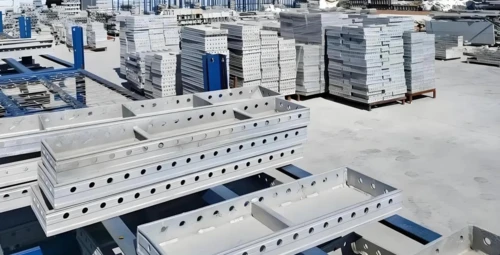
Enterprise Research on aluminum formwork
Aluminum formwork creates an enclosed space by combining the formwork, allowing the concrete to solidify. The formwork is dismantled and used for the next floor's construction, and then removed from the site after the structure is complete. However, aluminum metal is chemically reactive, and during construction, it easily interacts physically and chemically with the concrete, causing concrete to adhere to the formwork surface.
Removing dust stains incurs additional costs.
First, cleaning is labor-intensive and labor-intensive.
Second, avoiding the use of a release agent to save costs leads to dust stains.
Third, simple dust cleaning is often inadequate, often resulting in heavy dust stains during construction.
When leaving the site, if the formwork is returned to the lessor without cleaning, the weight of the concrete slurry will be included in the weighing, impacting the interests of both parties involved in the lease.
Calculation of attached concrete rental weight error:
Assume that the net weight of the aluminum formwork is 1 ton upon arrival and remains 1 ton upon departure. Due to the attached weight of concrete slurry, the net weight of the aluminum formwork may be only 0.9 tons after cleaning. Therefore, when the lessee returns the leased property, 0.1 tons of aluminum formwork will be missing.
Industry research on dust contamination by the China Formwork and Scaffolding Association, which surveyed key companies, revealed the following:
1. JW Group: Industry research indicates that weighting is more common in the south, while area measurement is sometimes used in the north. Dust contamination is approximately 10%, with the highest rate reaching 15%. This is difficult to quantify due to varying construction site conditions.
2. ZT Group: Dust contamination is 5-8%. Weighting is the primary method.
3. TLC Group: Dust contamination is 8%-12%. The company has strict requirements and measures the area of aluminum formwork for each order, resulting in low efficiency and resistance from all parties.
4. SL Aluminum Formwork: Dust contamination is 5%-10%. Weighting is common.
5. JC Aluminum Formwork: Dust contamination is 5%-10%. Both weighting and area measurement are used.
6. CF Group: Dust contamination is 5%-6%. Each project varies, with varying number of floors. Several pieces are weighed on-site to calculate the agreed-upon ratio. 7. RF aluminum formwork: 5-8% dust adhesion. Generally, items are weighed.
8. Several other companies have similar situations, with most being weighed.
Regarding the challenges of removing dust from aluminum formwork and calculating the dust adhesion rate after it leaves the site, the association sincerely invites industry experts to collaborate on more reasonable regulations. Conclusion: The characteristics of aluminum formwork necessitate the highest priority in formwork cleaning and weighing during concrete construction. Upon return to the factory, heavily dusted aluminum formwork should be removed first, or the mortar should be cleaned promptly. Formwork that is heavily bonded to the concrete should not be directly included in the weight calculation to avoid economic losses caused by sediment adhesion.