

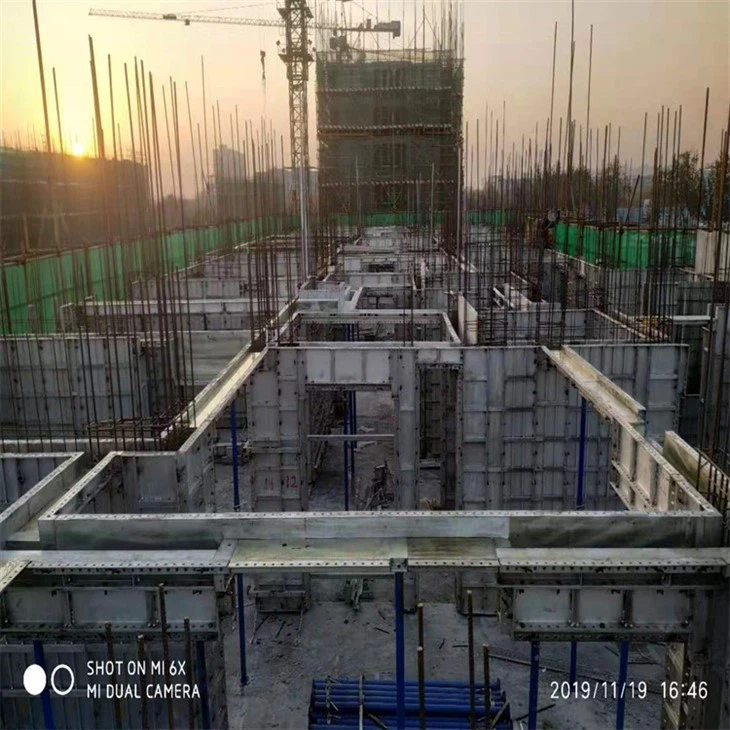
After nearly 20 years of operation and development, China tianqu group has become a large group enterprise integrating real estate, aluminum profiles, aluminum templates, doors and Windows, curtain walls, new energy, trade city, five-star hotels, etc., with more than 10 subsidiaries under its jurisdictionTianqu aluminum mold business covers aluminum mold research and development, design, production, sales, leasing, installation guidance and old plate renovation. At present, zaozhuang city in shandong province has a factory (covers an area of 150 mu, with an annual capacity of 300,000 square meters), zaozhuang city two factory (covers an area of 200 mu, with an annual capacity of 400,000 square meters), Qingdao factory (covers an area of 150 mu, with an annual capacity of 300,000 square meters, mainly radiation around Qingdao and overseas projects) three production bases.
Why Choose Us
High Quality Products
More than 90% of the global aluminum template enterprises are using 6061-t6 aluminum profiles, Tianqu aluminum mold is using self-developed high-strength aluminum alloy profiles.
Our Certificate
The enterprise has passed ISO9001 quality management system certification, the enterprise has been awarded AAA level credit certification, and has more than 40 patents, general manager Ni zuliang was awarded the "good faith entrepreneur" honorary title.
Our Service
Design technical support,Template pre-assembly support,TTechnical guidance and support,TMaterial supply support.
One-stop Solution
Tianqu aluminum mold business covers aluminum mold research and development, design, production, sales, leasing, installation guidance and old plate renovation.

The Aluminum Formwork Screw System
The Aluminum Formwork screw system is a more traditional way in the construction of aluminum mold. In this system, the screws are usually made of high-strength steel, and the aluminum forms are tightly held together by a threaded connection. The double pipe steel back is attached for reinforcement, and the overall stability is good. During the installation process

Aluminum Formwork Super High-Rise Screw System
Aluminum formwork super high-rise screw system is an advanced formwork support system widely used in the construction of super tall buildings. The system is mainly composed of a high-strength screw and a matching nut, a backing plate and other components. It has many significant advantages: In terms of structural stability, it can provide reliable support for the concrete pouring of super tall buildings, ensure the stability of the formwork system during the construction process

The Aluminum Formwork Pull System
The Aluminum Formwork pull system is a more advanced connection method. It is mainly composed of a pull piece and a connecting piece, and the adjacent aluminum template is fixed together through the pull knot action of the pull piece. Compared with the screw system, the installation and disassembly of the drawing system is faster and more convenient, which greatly improves the construction efficiency.

Aluminum Mold strictly ensure that the dimensions of the building components are consistent and meet the design requirements, avoiding subsequent construction problems caused by dimensional deviations.

Aluminium Moulding can meet the needs of different types of building structures, whether shear walls, frames or other complex structural systems, can provide effective support. Aluminium Moulding with high versatility and adaptability, it can be flexibly applied in different projects, reducing the difficulty and cost of construction.

The strength of Die cast aluminum mold is very good. Even under great lateral pressure, it can still maintain the perpendicularity and stability of the wall, effectively preventing the wall from tilting or deformation.In high-rise buildings

Aluminium stair formwork refer to the precast formwork system made of aluminum alloy materials to pour concrete stairs in building construction. This construction method has the characteristics of high efficiency, accuracy, environmental protection and reusable, especially suitable for high-rise residential buildings, commercial buildings and other projects with high construction speed and engineering quality requirements.

Wall Slab Column Formwork System
Wall Slab Column Formwork System constitutes a pivotal constituent within the aluminum formwork system, tailored explicitly for the construction of concrete walls, guaranteeing their geometric integrity, dimensional precision, and surface evenness.

Lower Cost High Efficiency Aluminium Formwork
The production according to a unified standard ensures consistent quality and performance across multiple templates. The increased interchangeability and universality of Lower Cost High Efficiency Aluminium Formwork allow for easier integration into different projects. This standardization leads to greater efficiency in the production process and easier quality control.
What is Sloped Aluminum Formwork
The Sloped Aluminum Formwork, leveraging its modular, standardized, and easily disassemblable attributes, not only substantially enhances efficiency and convenience in building construction but also demonstrates significant specialized advantages in design optimization, quality control, cost management, safety, and environmental protection. It powerfully drives the industrialization, refinement, and greening of the construction sector.
Benefits of Sloped Aluminum Formwork
Design optimization and project coordination
Modular design enables aluminum formwork components to function like architectural building blocks, adaptable to various structural needs and simplifying the design process. Customized templates are minimized as designers can swiftly generate layout plans that meet building dimensions and shapes by combining standardized units. This greatly shortens the design cycle. Moreover, modular design facilitates integration with Building Information Modeling (BIM) technology, enabling digital management of formwork design, production, transportation, and installation, thus enhancing overall project coordination efficiency.
On-site construction efficiency boost
Standardized production ensures high manufacturing precision and consistency in the quality of aluminum formwork, reducing the need for rework and repairs due to template issues. On-site assembly involves merely following pre-determined assembly sequences and methods, eliminating complex tasks such as cutting and sanding, significantly saving labor and time. Modular design also allows for factory pre-assembly of large quantities of formwork in a streamlined manner, with only final hoisting and minor adjustments required at the site, further increasing installation speed.
Quality assurance
The highly accurate assembly of sloped aluminum formwork, combined with a sound support structure and reinforcement measures, ensures critical parameters like wall verticality and floor flatness after concrete pouring meet stringent standards, minimizing structural defects and surface quality issues caused by template deformation. Standardized design and production also reduce joints and misalignments between templates, facilitating either no-plaster or thin-layer plaster applications, thereby enhancing the finish quality and durability of building surfaces.
Material savings and cost reduction
The ease of disassembly and reassembly allows aluminum formwork to be quickly dismantled, cleaned, and reassembled during construction, resulting in rapid turnaround and high reuse rates. Compared to single-use wooden forms or steel forms with limited lifespans, the cost per use of aluminum formwork is significantly reduced after multiple uses. Additionally, aluminum formwork's lightweight nature and compact size lead to lower transportation and storage costs, while requiring less timber, contributing to forest resource conservation and aligning with sustainable development objectives.
Types of Sloped Aluminum Formwork
Flat-Tie System
This formwork system features internal connectors and flat ties to fix formwork panels together. It requires less accessories for assembly and provides higher precision. Without tie-rod holes, it achieves a smoother concrete surface finish.
Tie-Rod System
With external connectors and tie rods passing through the panels, the tie-rod aluminium formwork system delivers high strength and stability essential for renovation projects or structures with a wall thickness of over 400mm. Its versatility enables formwork refurbishment and repeated usage on multiple floors of high-rise buildings.
Application of Sloped Aluminum Formwork
Construction field
In the construction field, inclined aluminum formwork is widely used in the structural system of large buildings such as high-rise buildings, office buildings, subway stations, TV towers, etc. The use of inclined aluminum formwork construction can improve the speed, quality and safety of engineering construction, and also reduce the cost of construction.
Bridge paving field
In the field of bridge paving, inclined aluminum formwork can be used to build various types of bridges, such as highways, railways, urban expressways, bridge tunnels, etc. Oblique aluminum formwork plays an important role in bridge construction and can improve the structural strength and stability of bridges.


Tunnel engineering field
In the field of tunnel engineering, inclined aluminum formwork can be used to build various types of tunnels, such as highway tunnels, railway tunnels and municipal tunnels. The advantages of inclined aluminum formwork are light weight, easy splicing and quick disassembly, which is suitable for complex terrain and difficult construction.
Water conservancy and environmental protection field
In the field of water conservancy and environmental protection, inclined aluminum formwork can be used to build various types of water conservancy facilities, such as reservoirs, hydropower stations and sewage treatment plants. Oblique aluminum formwork has the characteristics of green, environmental protection and energy saving, which can effectively reduce investment costs and construction costs and promote the sustainable development of projects.
Components of Sloped Aluminum Formwork
Panels
Panels act as the main load-bearing parts and come in various types to serve different purposes. Wall panels are the most commonly used and contain tie rod holes for the construction of walls. Wall top panels are utilized for the tops of walls. Column panels form the molds for column construction. Crane-way panels provide paths for cranes to travel on during high-rise building works.
Connectors
Connectors play a vital joining role. External joint connectors fix panels on the outside of structures. Internal joint connectors are used between adjacent panels from inside. Beam corner joints connect wall and beam panels at angled positions. The sturdy designs of these connectors guarantee panels are firmly interlocked and free of gaps or misalignment.
Bracing
Temporary bracing elements provide crucial stability to support beams, roofs, and more during construction. Kicker braces support the base of beams. Soffit braces are attached to slab undersides. Semi-circular rocker braces resist uneven loading on curved structures. The adjustable bracing connections conform to irregular profiles and deliver maximum safety even under high load conditions.
How to Choose Sloped Aluminum Formwork
Installation location
First, we need to consider the installation location of the wall aluminum formwork, such as indoors or outdoors. Since the indoor wall aluminum formwork is subjected to less force, the thickness does not need to be very large, and generally a thickness of 2.0mm or 2.5mm is sufficient. Outdoors, due to the greater influence of natural factors such as wind, rain, and sunlight, a thickness of more than 3.0mm needs to be selected.
Use environment
In addition to the installation location, we also need to consider the specific use environment of the wall aluminum formwork. If it is installed on the exterior wall of a high-rise building, a wall aluminum formwork with a thickness of more than 4.0mm needs to be selected to ensure that it withstands the influence of factors such as wind pressure and temperature changes.
Economic and practical
The last consideration is economic and practical. Generally speaking, the thicker the wall aluminum formwork, the higher the price, so choosing the right thickness not only needs to consider the use environment and safety factors, but also economic and practical factors. If conditions permit, choosing a slightly thicker thickness is a safer and more reasonable choice.
How to Install Aluminum Formwork
Pre-Installation Preparation
Before you begin the installation of aluminum formwork, it is important to first ensure that you have all the necessary equipment and tools. The tools required for aluminum formwork installation include screw guns, hammers, levels, measuring tapes, and saws. You will also need to have a detailed plan of the construction site and the structure to be built.
Installing Aluminum Formwork
The installation process of aluminum formwork involves several steps. The first step is to assemble the panels that will be used to create the formwork. The panels should be assembled according to the manufacturer's instructions. Once the panels are assembled, they are then connected using pins and wedges to form a complete unit. The next step is to place the formwork on the construction site. The formwork should be placed in the right position and aligned properly. The formwork is then secured to the ground using steel stakes. After securing the formwork to the ground, the reinforcement steel bars are placed in the formwork. The bars should be placed according to the design of the structure. Once the reinforcement bars are in place, the concrete is poured into the formwork. Once the concrete has set and cured, the formwork is removed. The panels are then disassembled, cleaned, and stored for future use.
Reasonable use of lubricants
During the use of the inclined aluminum formwork, lubricants need to be applied regularly to reduce the friction between the formwork and the concrete, thereby reducing the wear of the formwork. It is recommended to use professional inclined aluminum formwork lubricants and use them correctly according to the instructions.
Correct installation and removal of the formwork
When installing and removing the inclined aluminum formwork, the operating procedures should be followed to ensure that the formwork is installed firmly and stably to avoid shaking, movement, etc. At the same time, when removing the formwork, violent means should be avoided to avoid damage to the formwork and accessories.
Clean the formwork surface in time
During the use of the inclined aluminum formwork, a large amount of concrete residue and debris will be attached to the surface, which needs to be cleaned in time. It is recommended to use a soft cloth or sponge dipped in an appropriate amount of clean water or neutral detergent for cleaning, and avoid using sharp tools or chemicals to avoid damaging the surface of the formwork.
Storage environment and precautions
During the storage process, the inclined aluminum formwork should avoid direct exposure to sunlight and humid environments to avoid deformation and corrosion of the formwork. It is recommended to store the inclined aluminum formwork in a dry, ventilated, and cool place, and take necessary dust prevention measures. At the same time, during transportation, violent vibrations and collisions should be avoided to avoid damage to the formwork and accessories.
Repair damaged and worn parts
Damaged and worn parts of the inclined aluminum formwork during use should be repaired in time. When repairing, appropriate repair materials and tools should be selected and repaired in accordance with the operating procedures. It is recommended to thoroughly clean and inspect the damaged and worn parts before repair to ensure the quality and safety of the repair.
Regular maintenance and maintenance
In order to extend the service life of the inclined aluminum formwork, it is recommended to perform regular maintenance and maintenance. Specifically, it includes: regularly checking whether the surface of the formwork is damaged, deformed, rusted, etc.; checking whether the accessories are complete and intact; checking whether there are abnormal sounds or vibrations during installation and disassembly; regularly cleaning the surface of the formwork, etc.

Our Factory
After nearly 20 years of operation and development, China tianqu group has become a large group enterprise integrating real estate, aluminum profiles, aluminum templates, doors and Windows, curtain walls, new energy, trade city, five-star hotels, etc., with more than 10 subsidiaries under its jurisdictionTianqu aluminum mold business covers aluminum mold research and development, design, production, sales, leasing, installation guidance and old plate renovation. At present, zaozhuang city in shandong province has a factory (covers an area of 150 mu, with an annual capacity of 300,000 square meters), zaozhuang city two factory (covers an area of 200 mu, with an annual capacity of 400,000 square meters), Qingdao factory (covers an area of 150 mu, with an annual capacity of 300,000 square meters, mainly radiation around Qingdao and overseas projects) three production bases.
certificate

FAQ
Hot Tags: Aluminum panels, China Aluminum panels manufacturers, suppliers, factory


