

After nearly 20 years of operation and development, China tianqu group has become a large group enterprise integrating real estate, aluminum profiles, aluminum templates, doors and Windows, curtain walls, new energy, trade city, five-star hotels, etc., with more than 10 subsidiaries under its jurisdictionTianqu aluminum mold business covers aluminum mold research and development, design, production, sales, leasing, installation guidance and old plate renovation. At present, zaozhuang city in shandong province has a factory (covers an area of 150 mu, with an annual capacity of 300,000 square meters), zaozhuang city two factory (covers an area of 200 mu, with an annual capacity of 400,000 square meters), Qingdao factory (covers an area of 150 mu, with an annual capacity of 300,000 square meters, mainly radiation around Qingdao and overseas projects) three production bases.
Why Choose Us
High Quality Products
More than 90% of the global aluminum template enterprises are using 6061-t6 aluminum profiles, Tianqu aluminum mold is using self-developed high-strength aluminum alloy profiles.
Our Certificate
The enterprise has passed ISO9001 quality management system certification, the enterprise has been awarded AAA level credit certification, and has more than 40 patents, general manager Ni zuliang was awarded the "good faith entrepreneur" honorary title.
Our Service
Design technical support,Template pre-assembly support,TTechnical guidance and support,TMaterial supply support.
One-stop Solution
Tianqu aluminum mold business covers aluminum mold research and development, design, production, sales, leasing, installation guidance and old plate renovation.

The Aluminum Formwork Screw System
The Aluminum Formwork screw system is a more traditional way in the construction of aluminum mold. In this system, the screws are usually made of high-strength steel, and the aluminum forms are tightly held together by a threaded connection. The double pipe steel back is attached for reinforcement, and the overall stability is good. During the installation process

Aluminum Formwork Super High-Rise Screw System
Aluminum formwork super high-rise screw system is an advanced formwork support system widely used in the construction of super tall buildings. The system is mainly composed of a high-strength screw and a matching nut, a backing plate and other components. It has many significant advantages: In terms of structural stability, it can provide reliable support for the concrete pouring of super tall buildings, ensure the stability of the formwork system during the construction process

Wall Formwork is a crucial component within the aluminum formwork system, specifically designed for concrete wall pouring construction, ensuring the geometric shape, dimensional accuracy, and surface smoothness of the walls. Below is a detailed introduction to wall formwork:

Aluminum For Molds can adapt to the construction needs of special shapes such as irregular and curved surfaces, offering greater design flexibility. This enables the creation of unique and innovative structures that may not be feasible with traditional templates. Aluminum For Molds meets the design requirements of various special structures of buildings, expanding the possibilities of architectural design.

The Aluminum Formwork Pull System
The Aluminum Formwork pull system is a more advanced connection method. It is mainly composed of a pull piece and a connecting piece, and the adjacent aluminum template is fixed together through the pull knot action of the pull piece. Compared with the screw system, the installation and disassembly of the drawing system is faster and more convenient, which greatly improves the construction efficiency.

Lower Cost High Efficiency Aluminium Formwork
The production according to a unified standard ensures consistent quality and performance across multiple templates. The increased interchangeability and universality of Lower Cost High Efficiency Aluminium Formwork allow for easier integration into different projects. This standardization leads to greater efficiency in the production process and easier quality control.

Wall Slab Column Formwork System
Wall Slab Column Formwork System constitutes a pivotal constituent within the aluminum formwork system, tailored explicitly for the construction of concrete walls, guaranteeing their geometric integrity, dimensional precision, and surface evenness.

The strength of Die cast aluminum mold is very good. Even under great lateral pressure, it can still maintain the perpendicularity and stability of the wall, effectively preventing the wall from tilting or deformation.In high-rise buildings

Aluminium Moulding can meet the needs of different types of building structures, whether shear walls, frames or other complex structural systems, can provide effective support. Aluminium Moulding with high versatility and adaptability, it can be flexibly applied in different projects, reducing the difficulty and cost of construction.
What is Aluminum Formwork Syste
The aluminium formwork system is a building system used to form cast-in-place concrete structures of buildings. This formwork is made of aluminium alloy, which has high tensile strength and is very hard. Aluminium does not rust like steel. Therefore, the aluminium formwork can be reused hundreds of times.
Flexibility
The aluminum formwork system is flexible and it is easily adapted for every variation in the building layout. It works with modern construction techniques, and equipment. It can be smoothly fitted to formwork modulation. It is simple to use and anyone can use it.
Less maintenance
The aluminum formwork system requires less maintenance and less repairs. While working with it, you will notice that it requires less repairs. It can be repaired without damaging the other parts of the system. You can easily work with it and finish the work in less time. There is no need of plastering.
Cost effective
It is a cost effective technology that you can use for your better construction of the building. It has a great significance which supports the building structure to make it impressive. The total cost of aluminum formwork system is less than other formwork systems.
Excellent stability and bearing capacity
An aluminum formwork system comprises an aluminum alloy with remarkable tensile strength and hardness. After assembling the system, a fundamental frame is established, providing exceptional stability.In fact, the load-carrying capacity per sq meter can surpass 60KN. Additionally, the aluminum formwork technology enables pouring both floors and walls simultaneously. This increases productivity and results in a structure with a great concrete finish and exceptional strength.
Types of Aluminum Formwork Syste
Flat-Tie System
This formwork system features internal connectors and flat ties to fix formwork panels together. It requires less accessories for assembly and provides higher precision. Without tie-rod holes, it achieves a smoother concrete surface finish.
Tie-Rod System
With external connectors and tie rods passing through the panels, the tie-rod aluminium formwork system delivers high strength and stability essential for renovation projects or structures with a wall thickness of over 400mm. Its versatility enables formwork refurbishment and repeated usage on multiple floors of high-rise buildings.
Construction field
In the construction field, aluminum formwork systems are widely used in the structural systems of large buildings such as high-rise buildings, office buildings, subway stations, TV towers, etc. The use of aluminum formwork construction can improve the speed, quality and safety of engineering construction, and also reduce the cost of construction.
Bridge paving field
In the field of bridge paving, aluminum formwork systems can be used to build various types of bridges, such as highways, railways, urban expressways, bridge tunnels, etc. Aluminum formwork plays an important role in bridge construction and can improve the structural strength and stability of bridges.


Tunnel engineering field
In the field of tunnel engineering, aluminum formwork systems can be used to build various types of tunnels, such as highway tunnels, railway tunnels and municipal tunnels. The advantages of aluminum formwork are light weight, easy splicing and quick disassembly, which are suitable for complex terrain and difficult construction.
Water conservancy and environmental protection field
In the field of water conservancy and environmental protection, aluminum formwork systems can be used to build various types of water conservancy facilities, such as reservoirs, hydropower stations and sewage treatment plants. Aluminum formwork has the characteristics of green, environmental protection and energy saving, which can effectively reduce investment costs and construction costs and promote the sustainable development of projects.
Components of Aluminum Formwork Syste
Panel System
The main body of the template system, composed of extruded high-strength aluminum alloy profiles. These panels offer high flatness, rigidity, lightweight, and corrosion resistance. Customized according to design requirements, they form the casting molds for walls, columns, beams, floor slabs, and other concrete structures.
Support System
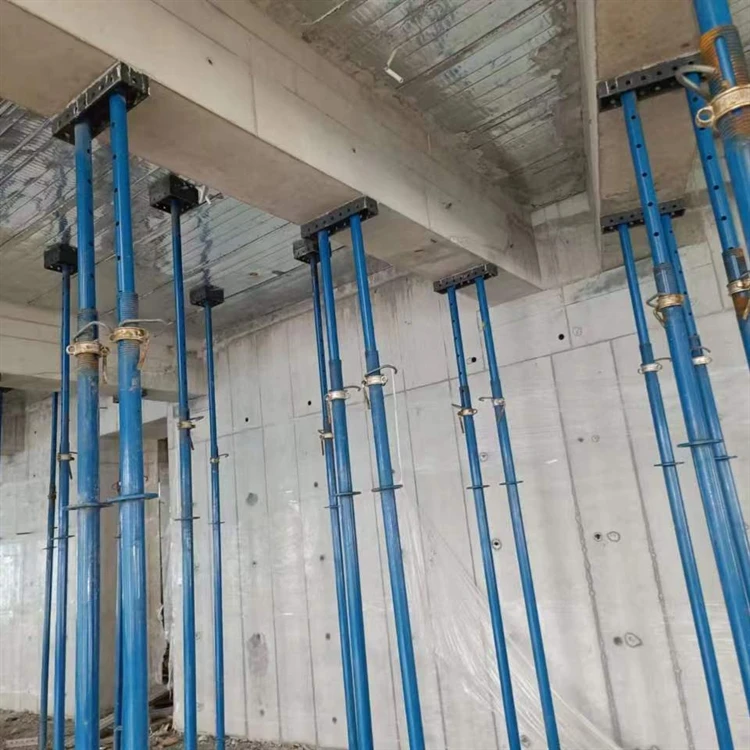
Includes steel posts, braces, backstays, etc., which ensure stability during concrete pouring, resist lateral pressures, and maintain accurate spacings between templates and between templates and the structure. The support system typically utilizes high-strength steel in conjunction with aluminum templates to create a sturdy overall framework.
Fastening System
Consists of tie-rods, pins, couplers, clamps, etc., that firmly connect the templates to the support system and ensure sealing between panels to prevent concrete leakage during pouring. The fastening system should be easy to install and remove while possessing adequate strength and durability.
Accessory System
Comprises corner aluminum profiles, end caps, embedments, early stripping support heads, and other auxiliary components that address special features such as edge treatments, joints, openings, and pre-installed pipelines, ensuring the integrity and precision of the template system.
Characteristics of Aluminum Formwork Syste
Speed
Ease in formwork / stripping Formwork and the ability to perform monolithic concreting for any structure gives the "Aluminum Formwork System" a superior speed advantage. Using the technology of the aluminum formwork system, a seven-day floor-to-floor cycle can be achieved.
Quality
The "Aluminum mold system" is manufactured with a precise tolerance and provides high quality shuttering components that guarantee the consistency of the architectural dimensions.
Security
Great importance is attached to safety when designing the "Aluminum formwork system". External supports are provided that are fixed along the periphery of the structure in two levels for a secure erection and the formwork of the external formwork.
Ease and demoulding facility
A lot of importance is given to the erection and the time of disconnection of the formwork. The vertical and horizontal members are blocked through pins and wedges. The vertical components of the formwork can be removed in 24 hours and the horizontal components of the formwork can be removed in 72 hours without altering the struts, so that the components of the formwork can be used for the subsequent floors with the second set of accessories.
Easy handling of materials
The light weight of the system guarantees a smooth flow of the component without the use of any external material handling equipment, such as cranes and super covers, since a single person can easily transport the formwork components to the next level.
Highly versatile and durable
High quality aluminum alloys are used to manufacture the "Aluminum formwork system" with the highest standards of manufacturing methods and practices that allow the consumer to achieve up to 300 uses, under ideal conditions and proper handling.
How to Choose Aluminum Formwork Syste
Manufacturing Capabilities and Quality
We require a partner that can translate innovative designs into high-quality, precision-engineered aluminum formwork systems, and that demands a thorough evaluation of their manufacturing capabilities and quality control processes.We need to verify that our partner has the advanced technology and expertise to produce high-quality aluminum formwork systems that meet international standards and customer specifications. This means they should have CNC machining and robotic welding capabilities to guarantee precision and efficiency.
Lead Times and Delivery Reliability
With our sights set on a partner that can deliver exceptional aluminum formwork systems, we turn our attention to a critical aspect of their operations: lead times and delivery reliability. We need a partner that can keep up with our project timelines and facilitate timely delivery of formwork systems.When evaluating an aluminum formwork design company, we look for those with shorter lead times, typically 2-4 weeks, to reduce project timelines and increase construction efficiency. A reliable delivery schedule is vital, and we prefer companies that offer just-in-time delivery to minimize on-site storage and reduce waste.
Safety Record and Quality Control
A reputable aluminum formwork design company should prioritize safety, boasting a low incident rate and a steadfast commitment to safeguarding the well-being of their employees and clients.A company's quality control processes are crucial, including regular inspections and testing of their formwork systems to guarantee they meet or exceed industry standards. Certifications such as ISO 9001 demonstrate a company's commitment to quality management and continuous improvement.
Customer Service and Support
Every reputable aluminum formwork design company should prioritize customer service and support, as it's a critical aspect of building trust and guaranteeing client satisfaction.We recognize that a reliable company should offer dedicated customer support through multiple channels, including phone, email, and online chat, to provide prompt assistance with any queries or concerns.When evaluating a potential partner, we look for a customer service team that has in-depth knowledge of aluminum formwork systems and can provide technical guidance and troubleshooting support to clients.
Preparing The Site
Similar to its conventional counterpart, once the site is compacted, trenches are dug, plumbing is installed, and the horizontal aluminium formwork is set. Structural footings are dug and slab steel is installed in accordance with local code.
Setting Up The Wall Steel
The wall steel is used to form the building structure. The steel reinforcement supports the concrete until it comes to about fifty percent of its designed strength. The steel mesh is pre-fabricated and can be easily set up on-site. Electrical boxes and rigid or flexible conduits are attached to the wall steel, depending on local codes.
Placing Formwork
Aluminium formwork is pre-built, designed and manufactured inside the factory. It is accurately sized according to the desired measurement of beams, slabs, columns, staircases and all other structural requirements. Also, it is easily assembled on-site by a pin-and wedge system.
Pouring Concrete
Once all the necessary formwork is in place, concrete is then poured inside. The formwork can be dismantled when the concrete cures and reaches optimal strength. Aluminium formwork can be easily taken apart and be ready for reuse once construction is done.
How to Maintain Aluminum Formwork Syste
Cleaning and maintenance
Regularly clean the dust, dirt and other debris on the surface of the aluminum formwork system. You can use a soft brush or damp cloth to wipe it, and avoid using corrosive detergents.
Prevent collisions
During use, avoid collisions between the aluminum formwork system and hard objects to avoid surface scratches or dents.
Prevent excessive loads
The load-bearing capacity of the aluminum formwork system is limited. Avoid overloading to avoid deformation or breakage.
Prevent humid environments
The aluminum formwork system is susceptible to moisture and is prone to rust in a humid environment for a long time. During storage and use, try to maintain a dry environment.
Regular inspections
Regularly check whether the connection parts and welding points of the aluminum formwork system are loose or damaged. If problems are found, repair or replace them in time.
Storage method
When the aluminum formwork system is not in use, it should be properly stored. It can be placed in a dry and ventilated place to avoid direct sunlight and rain soaking.
Prevent corrosion
The aluminum formwork system is susceptible to corrosion by chemicals, such as acid and alkali solutions. During use, be careful to avoid contact with these substances.

Our Factory
After nearly 20 years of operation and development, China tianqu group has become a large group enterprise integrating real estate, aluminum profiles, aluminum templates, doors and Windows, curtain walls, new energy, trade city, five-star hotels, etc., with more than 10 subsidiaries under its jurisdictionTianqu aluminum mold business covers aluminum mold research and development, design, production, sales, leasing, installation guidance and old plate renovation. At present, zaozhuang city in shandong province has a factory (covers an area of 150 mu, with an annual capacity of 300,000 square meters), zaozhuang city two factory (covers an area of 200 mu, with an annual capacity of 400,000 square meters), Qingdao factory (covers an area of 150 mu, with an annual capacity of 300,000 square meters, mainly radiation around Qingdao and overseas projects) three production bases.
certificate

FAQ
Hot Tags: aluminum formwork system, China aluminum formwork system manufacturers, suppliers, factory


