

The future market of templates in the construction industry will be divided into three parts
Based on material properties, technological evolution, and policy guidance, the future construction formwork market will be dominated by aluminum formwork, steel formwork, and plastic formwork. Each will dominate its niche market by leveraging its core strengths. The following analysis focuses on technology, cost, and application scenarios:
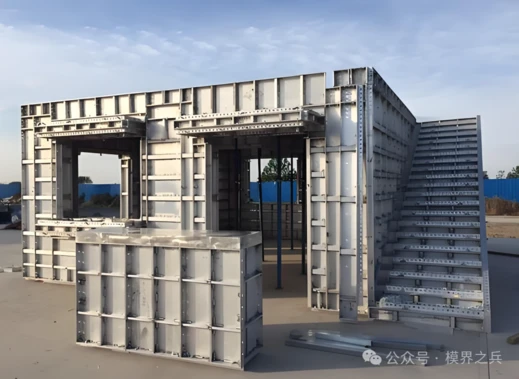
First, the advantages of aluminum formwork.
A single aluminum formwork weighs only 20-30 kg, only one-fifth the weight of a steel formwork. It can be easily operated by female workers, significantly reducing labor intensity. Its "quick-disassembly system" reduces single-layer formwork removal time to 4-6 hours, increasing construction efficiency by over 30%. The salvage value recovery rate reaches 90%, with a salvage value of approximately 150-200 yuan/㎡. The full lifecycle cost is lower than that of wooden formwork, aligning with the "aluminum instead of wood" policy, reducing forest resource consumption and carbon emissions. Emissions are 60% lower than wooden formwork, and the system is highly standardized and compatible with BIM systems, enabling digital management of the entire process from design to demolition. For super-high-rise buildings over 30 stories, the overall cost of aluminum formwork is 15%-20% lower than that of wooden formwork.
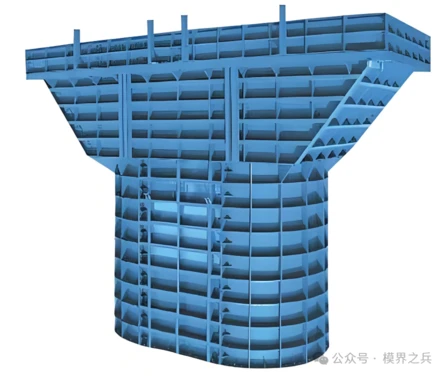
Secondly, the advantages of steel formwork include: Steel formwork boasts a compressive strength exceeding 300 MPa, capable of withstanding the pressure of pouring large components. It is suitable for heavy-duty and complex projects such as bridges and tunnels, boasts a service life exceeding 100 operations, and offers low maintenance costs, making it suitable for long-term turnaround projects. Steel-frame composite formwork (such as steel-wood combinations) combined with lightweight Quantitative and high-strength, suitable for the construction of special-shaped structures. Intelligent upgrades (such as laser cutting and BIM pre-assembly) improve accuracy to ±1mm, reducing on-site adjustment time. With national infrastructure investment shifting toward "new infrastructure," demand for steel molds in high-speed rail and urban rail transit continues to grow, with the market size expected to exceed 80 billion yuan in 2025. These molds are primarily suitable for heavy-duty projects such as bridges, tunnels, and large public buildings, and for the production of prefabricated components requiring multiple turnover (such as PC wall panels and pipe corridors).
Finally, the advantages of plastic molds:
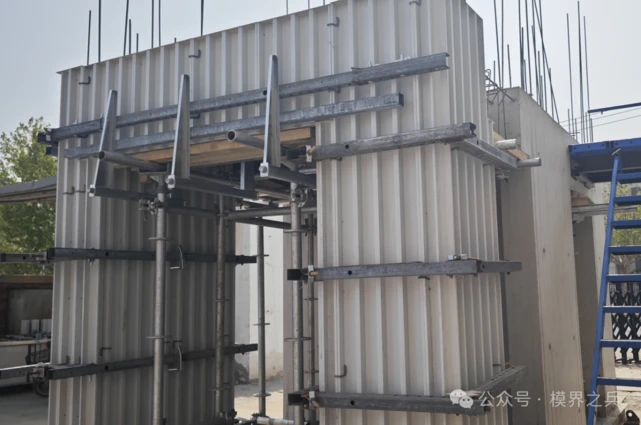
100% recyclable, with production energy consumption only a fraction of that of steel molds. 1/3, no heavy metal pollution after disposal, no release agent required for demolding, concrete surface finish meets fair-faced concrete standards, reducing secondary plastering costs, and unit price 30% lower than aluminum molds. Standardized formwork reduces labor reliance and is suitable for small and medium-sized projects. Its lightweight design (8kg/㎡) facilitates transportation and offers significant construction cost advantages in remote areas. High-performance composite materials (such as glass fiber reinforced plastic) increase flexural strength to 80MPa. Expanded application scenarios include 3D printing mold technology, which enables one-step molding of complex curved surfaces and reduces mold development cycles by 40%.
Current market share estimates:
Aluminum molds occupy 40% of the high-end market (super-high-rise buildings, commercial complexes), with an annual growth rate of 15%-20%.
Steel molds dominate 50% of the mid-range market (infrastructure and industrial construction), with an annual growth rate of 8%-10%.
Plastic molds penetrate 10% of the market segment (municipal and rural construction), with an annual growth rate of 25%-30%. It would be perfect if the three types of formwork could be improved and transferred and applied to one project at the same time. The highest-strength steel formwork could be used for the highest floors, the slightly lower-strength aluminum formwork could be used on the structural beams, and the plastic formwork could be used on the top plate. It would be the perfect combination to allow each type of formwork to play its various advantages and functions in one project.