

Construction technology for sealing conical bolt holes in aluminum formwork exterior walls
The following are some commonly used methods for sealing bolt holes in external walls:
The first method is to use cement mortar. This method requires first removing the through-wall sleeve, then injecting expanding foam into the bolt hole, and finally sealing it with mortar. It has the disadvantages of being difficult to implement and the mortar not being able to fill it completely.
The second method is to use cork plugs to fill the outside of the bolt hole. While this solves the problem of filling density, the cork is prone to aging.
The third method is to use precast blocks for sealing. This method solves the problem of the filler aging, but it requires hole enlargement, making it impractical.
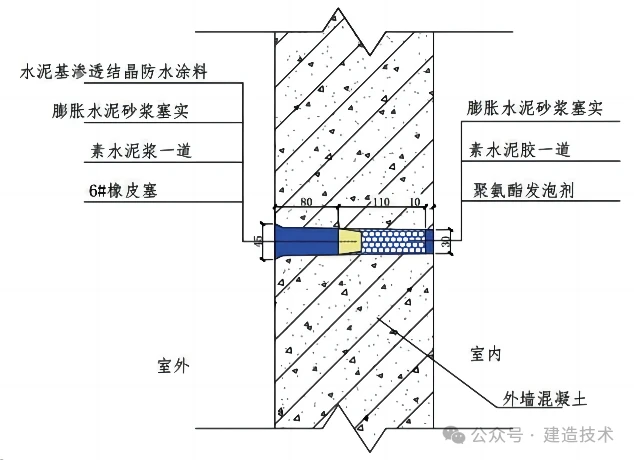
The fourth method is to use a tapered sleeve and cement mortar for sealing, but this still suffers from the disadvantage of incomplete mortar filling. The construction technology for sealing tapered tie rod holes in aluminum formwork exterior walls uses a tapered PVC sleeve that matches the aluminum formwork to form a funnel-shaped through-wall hole that is wider on the outside and narrower on the inside of the shear wall. After the sleeve is removed, a matching rubber plug is inserted into the hole from the outside in. Polyurethane foam material is filled on the indoor side. After treatment, expanding cement mortar is filled on both the inside and outside of the hole, and a cement-based penetrating crystalline waterproof coating is applied to the outside of the hole to achieve the purpose of preventing leakage in the exterior wall.
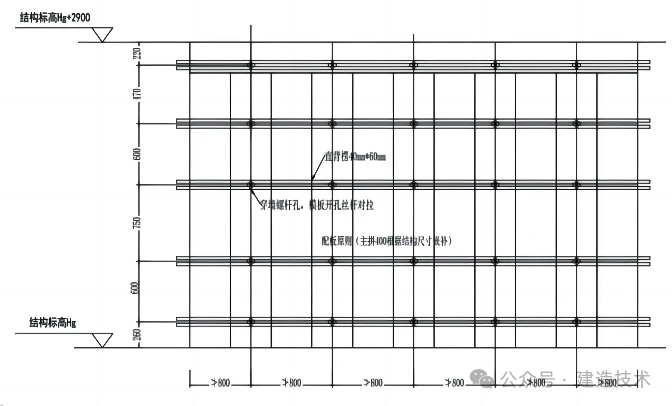
01 Project Formwork Usage Overview (1) The standard size of the wall and column formwork is 400mm × 2650mm, and the local configuration is based on the actual structural dimensions. The thickness of the aluminum sheet is >3.5mm.
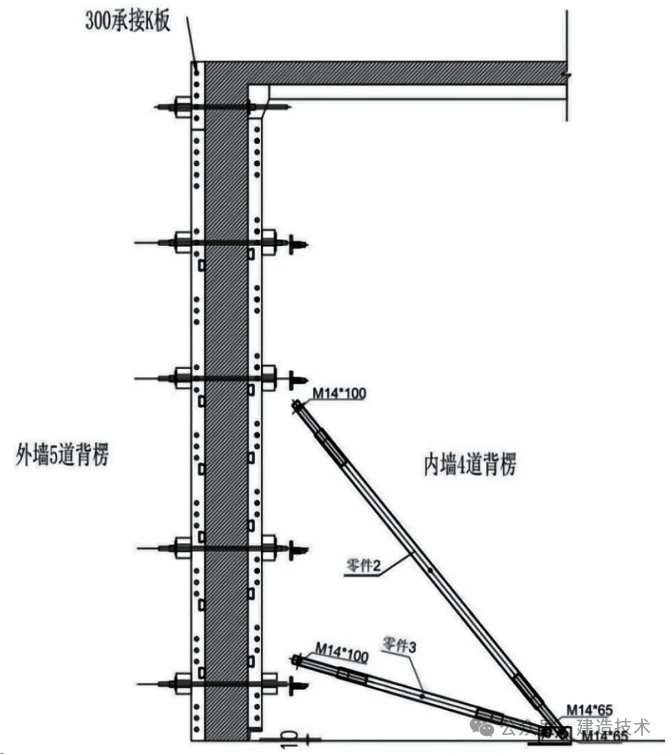
(2) A 300mm wide formwork layer is added to the top of the exterior wall to serve as a formwork transfer between floors.
(3) Tie rods need to be installed at the wall formwork, with a horizontal spacing of ≤800mm and a vertical spacing of ≤900mm. The tie rods serve to fix the formwork and control the wall thickness. The tie rods are T18 trapezoidal threaded rods, made of Q345# steel.
(4) Back ribs are provided on the back of the wall panels, with a spacing ≤900mm. The material is a 60mm×40mm×2.5mm rectangular steel pipe, with 4 ribs on the inner wall and 5 ribs on the outer wall.
(1) During the installation of the main formwork, the tapered sleeves are arranged according to the location of the tie rod holes in the aluminum alloy formwork detailed design. When installing the tapered sleeves, the larger end is on the outside and the smaller end is on the inside.
(2) Sleeve removal: During the construction of the outer wall, tapered sleeves are used for the tie rod sleeves. After the outer wall concrete is demolded, first remove the tie rods from the sleeves, then use a hammer and rebar to loosen the sleeves from the inside out. Finally, pull the sleeves out from the outside of the outer wall and store them for use on the next floor. (3) Cleaning the bolt hole: Approximately one month after removing the sleeve, clean the bolt hole thoroughly, removing any debris. If there is concrete or other debris in the bolt hole, use appropriate tools to clean it. After cleaning, blow it clean with a blower.
(4) Inserting rubber plugs: After cleaning the bolt hole, insert a #6 rubber plug from the outside inwards; the smaller end of the rubber plug should face inwards, and the larger end outwards. Tamp it firmly with a tamping rod. The rubber plug is considered properly inserted when the distance between the outer side of the rubber plug and the inner side of the exterior wall is 115-120mm.
(5) Applying cement slurry to the outer part of the bolt hole: Apply a layer of cement slurry mixed with 15% construction adhesive around the outer flared end of the exterior wall to ensure a rough surface.
(6) Wetting with water: The day after applying the cement slurry, spray water to wet the bolt hole. Spray water 1 hour before construction to keep the area around the bolt hole moist. Spray a small amount of water again during construction to facilitate the process. (7) Sealing the outer side of the exterior wall: Use a mortar gun to apply expansive cement mortar to the outside of the bolt holes in the exterior wall, ensuring the mortar surface is flush with the concrete surface. Use a small spray bottle for spray curing; the curing time should be no less than 3 days.
(8) Water spraying of the exterior wall: After the expansive cement mortar on the outer side of the exterior wall has cured, conduct a water spraying test on the exterior wall for no less than 1 hour.
(9) After the water spraying test, inspect the exterior wall to ensure there are no leaks. Apply a cement-based penetrating crystalline waterproof coating to the sealed bolt holes, forming a 10cm diameter circle.
(10) Applying foaming agent: After the water spraying is completed, apply polyurethane foaming agent from the inside out, ensuring the entire area is covered. After complete foaming, use a trowel or knife to remove any excess foaming agent, then push the foaming agent inwards by approximately 1cm. (11) Apply cement slurry: Apply a layer of cement slurry mixed with 15% construction adhesive around the inside of the flared opening of the exterior wall to ensure a rough surface.
(12) Moisten with water: The day after applying the cement slurry, use a spray bottle to moisten the area with water. Spray water 1 hour before construction to keep the area around the bolt holes moist. Spray a small amount of water again during construction to facilitate the process.
(13) Seal the inside of the exterior wall: Seal the inside of the bolt holes in the exterior wall with expanding cement mortar, ensuring the mortar surface is flush with the concrete surface.