

Aluminium Formwork: Benefits, Drawbacks, and Applications
In the ever-evolving world of construction, efficiency, sustainability, and precision are key drivers of success. Among the innovations shaping modern building practices, aluminium formwork has emerged as a game-changer, promising faster project completion, reduced material waste, and exceptional durability. But is it the ultimate solution for every construction need? While its lightweight design and reusability offer undeniable advantages, concerns about high initial costs and limited adaptability still spark debate among industry professionals. What makes aluminium formwork stand out, and how does it compare to other materials like steel and wood? Dive in to explore the benefits, challenges, and transformative applications of this cutting-edge construction tool-and discover whether it's the right fit for your next project.

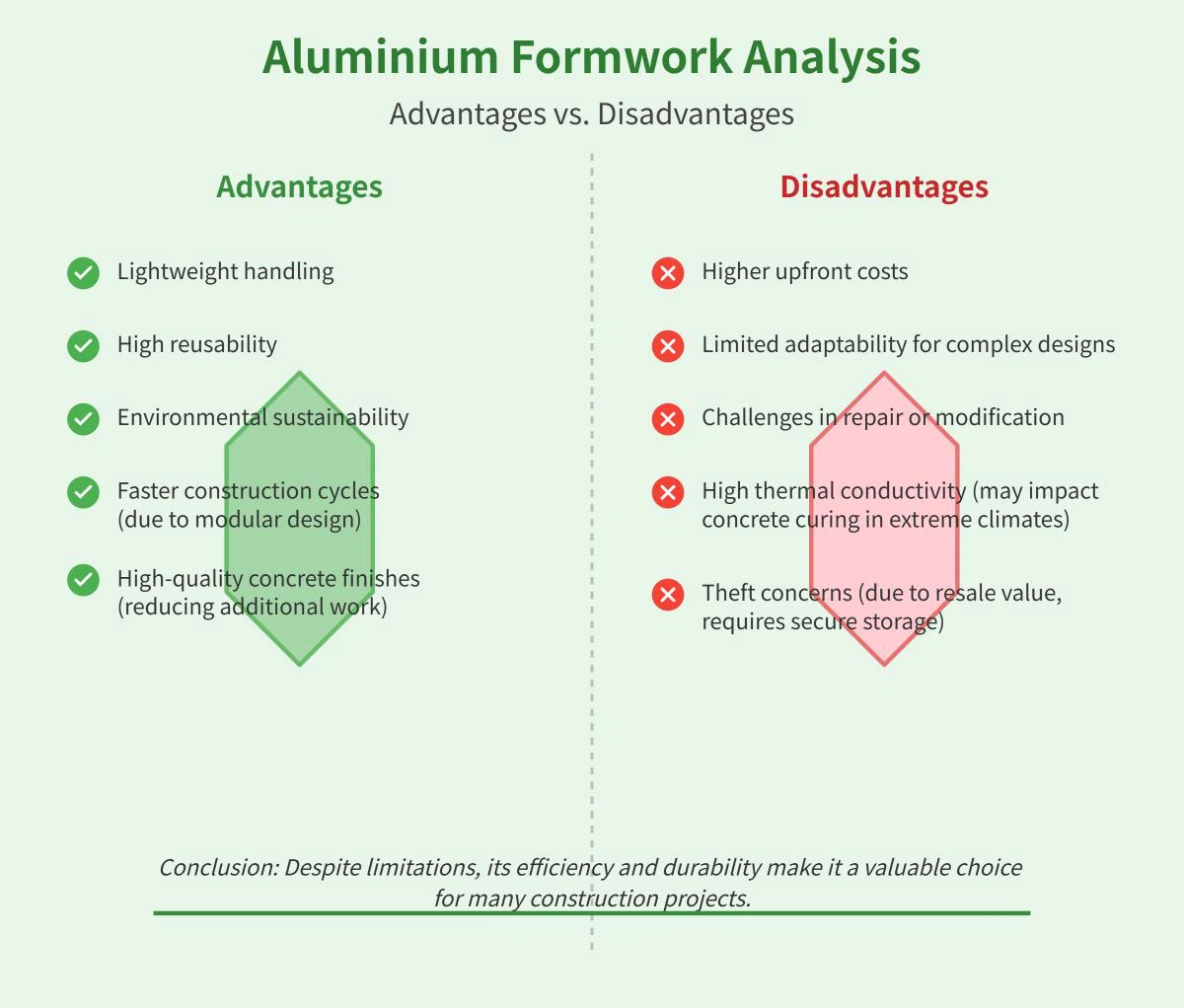
Advantages of Aluminium Formwork: Lightweight, Reusable, and Sustainable
Lightweight and Easy Handling
Aluminium formwork is known for being lightweight, making it much easier to handle compared to traditional materials like steel or timber. Its reduced weight minimizes the need for heavy lifting equipment, allowing construction teams to transport and assemble components with ease. This feature not only enhances worker safety by lowering the risk of injuries but also speeds up on-site operations, improving overall project efficiency.
High Reusability Across Projects
Aluminium panels are highly reusable, with a lifespan of up to 300 to 500 cycles. This durability ensures consistent performance without compromising structural integrity. The ability to reuse these panels multiple times minimizes material waste and leads to significant cost savings over time. For contractors, this makes aluminium formwork an economically sound choice, particularly for projects with repetitive construction requirements.
Rapid Assembly and Project Acceleration
Construction teams can quickly assemble pre-engineered components, simplifying installation and saving time. This modular design allows for efficient assembly and disassembly, enabling construction timelines to accelerate by 30% to 50% compared to traditional formwork systems. Faster operations translate into lower labor costs, making aluminium formwork a practical solution for high-rise buildings and large-scale infrastructure projects.
Superior Concrete Finish
Aluminium formwork provides a precise and consistent shape, ensuring smooth and uniform finishes in concrete structures. Unlike timber, which can warp or deform over time, aluminium panels maintain their accuracy, reducing the need for additional plastering or remedial work. This high-quality finish is especially valuable for projects that demand aesthetic precision or minimal post-construction modifications.
Environmentally Friendly and Sustainable
Aluminium can be recycled at the end of its use, reducing construction waste. Its long lifespan and high reusability support sustainable practices by minimizing the need for new raw materials. Additionally, the reduced reliance on timber formwork helps conserve natural resources, making aluminium a more environmentally responsible choice for modern construction projects.